THE SHAPE OF BLUE · BEHIND THE STORY
One human question.
Different ways of seeing.
An atheist daughter. A Christian father. What might the experiences people describe at the edge of death mean for them—and for the rest of us?
Where the story began
Philip Cowherd wrote The Shape of Blue because he was struck by similarities between accounts of near-death experiences and accounts of DMT experiences. He drew on recurring descriptions from both to construct the imagined afterlife his protagonist encounters.
That connection is the foundation of the novel. Her atheism and her father’s Christianity give them different starting points for approaching a human experience. Grief, sharp humor, and the possibility of understanding carry the question into a story.
The book asks what those parallels might mean. Readers are free to bring curiosity, skepticism, faith—or some combination of all three.
A few research starting points
The following studies offer context for the question. They are not endorsements of this novel, and similarities between reports do not establish a single explanation for them.
- DMT Models the Near-Death Experience — Timmermann and colleagues, 2018
A small controlled study compared reported DMT experiences with features measured on a near-death-experience scale and found substantial overlap. - An encounter with death — Michael, Luke, and Robinson, 2025
A detailed comparison found shared experiential structure alongside differences in the content and frequency of particular features. Similarities do not mean the accounts are identical. - AWAreness during REsuscitation–II — Parnia and colleagues, 2023
This cardiac-arrest study combined monitoring during CPR with survivors’ later interviews. It investigated awareness during resuscitation; it did not establish consciousness after irreversible brain death.
A DMT experience is not itself death. These studies examine reported experiences and, in the cardiac-arrest study, physiological recordings. Their findings do not tell us with certainty what everyone experiences after death. The novel’s afterlife remains an imaginative interpretation.
Bring the question to your reading group
- What makes an experience meaningful before we agree on its explanation?
- When might scientific curiosity and faith ask the same question?
- How do the daughter and father’s starting beliefs affect what they notice?
- Does the story change your understanding of the difference between evidence, interpretation, and hope?
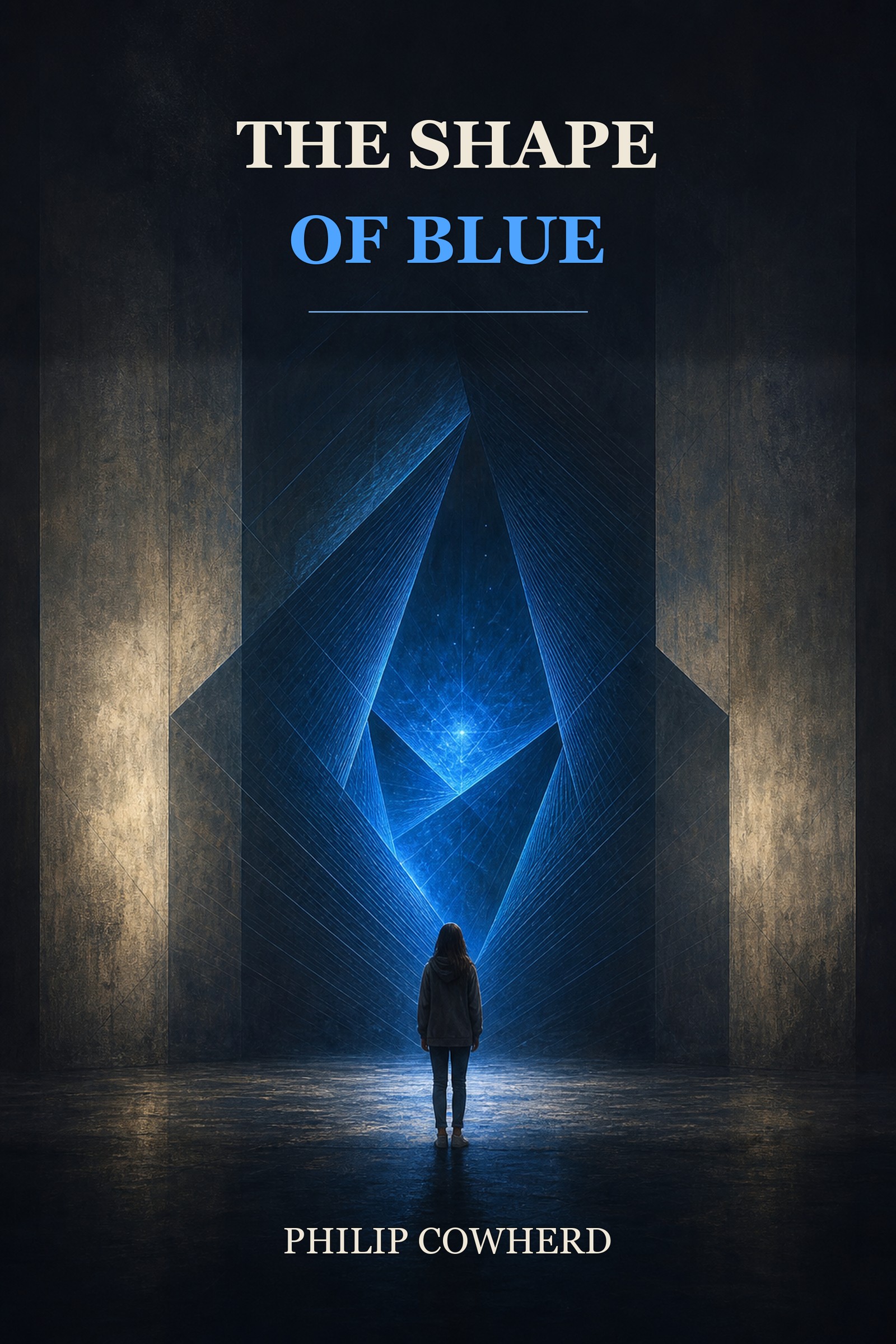
The Shape of Blue
Literary speculative fiction for older readers. Includes a fatal car accident and bereavement.
Find the Kindle editionAll available formatsStep into the story.
Read the opening of Hannah’s journey, then decide where it takes you.
Read the free excerpt